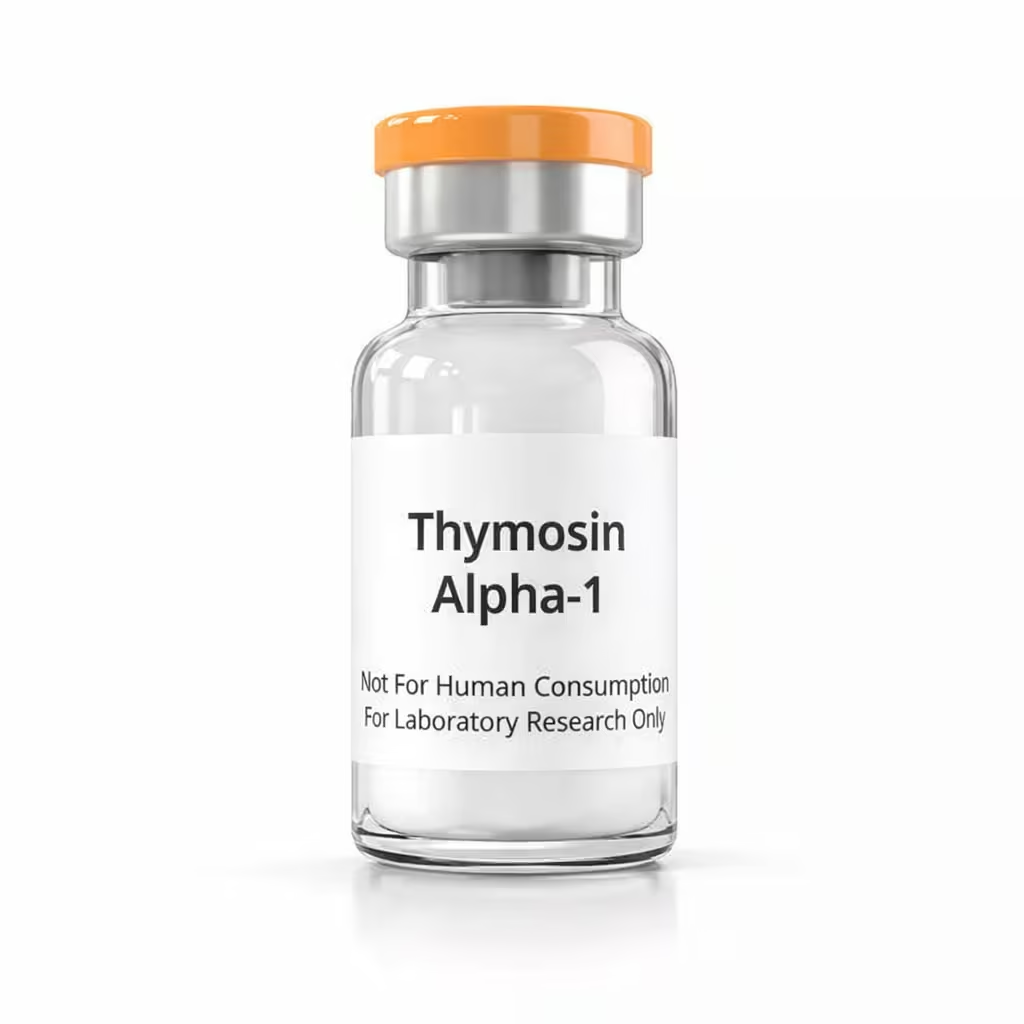
28-Amino Acid Thymic Peptide | Per Vial
From $69.00 / vial
4.9 / 5.0 - 187 reviews
Select Products
The thymic immune modulator: a naturally occurring peptide that amplifies T-cell function, enhances innate and adaptive immunity, and reduces chronic inflammation - the cornerstone peptide of longevity immune support protocols
Thymosin Alpha-1 (Tα1) is a 28-amino acid peptide naturally produced by the thymus gland. First isolated by Allan Goldstein at George Washington University in 1972, it was identified as the primary active fraction of thymosin fraction 5 - a thymic extract with known immunomodulatory activity. Tα1 acts across multiple arms of the immune system: it promotes the differentiation and maturation of T-lymphocytes, enhances natural killer (NK) cell activity, regulates cytokine balance, and suppresses chronic inflammatory signaling. It is approved as a pharmaceutical drug (Zadaxin) in over 35 countries for hepatitis B, hepatitis C, and as an immune adjuvant in cancer therapy.
Also see: Full Peptides Catalog | Official info: PubMed Thymosin Alpha-1 Research
Thymosin Alpha-1 occupies a unique position in the peptide landscape: it is one of the most extensively studied immunomodulatory peptides in the world, with over 40 years of clinical research and regulatory approvals in more than 35 countries. It was isolated from thymic tissue in 1972 and identified as the compound responsible for the immune-enhancing properties observed in thymosin fraction 5 preparations used in early immunology research.
Its primary function is the maturation and activation of T-lymphocytes - the central coordinators of adaptive immune response. As the thymus involutes with age (a process that begins in the mid-20s and accelerates after 40), T-cell output declines and immune surveillance weakens. Thymosin Alpha-1 counteracts this decline by promoting T-cell differentiation and enhancing the function of both helper and cytotoxic T-cells, natural killer cells, and dendritic cells.
| Peptide Name | Thymosin Alpha-1 (Ta1) |
| Amino Acids | 28-amino acid peptide (Ac-Ser-Asp-Ala-Ala-Val-Asp-Thr-Ser-Ser-Glu-Ile-Thr-Thr-Lys-Asp-Leu-Lys-Glu-Lys-Lys-Glu-Val-Val-Glu-Glu-Ala-Glu-Asn) |
| Molecular Weight | 3108.4 g/mol |
| Form | Lyophilized powder for reconstitution |
| Purity | > 99% (HPLC verified) |
| Storage | Refrigerate at 2-8C; protect from light |
| Price | From $69.00 per vial |
Initial T-cell activation and NK cell priming begins. Some users report improvements in energy and subjective well-being as immune signaling normalizes. No dramatic acute effects are expected at this stage.
Progressive improvement in immune resilience. Reduction in frequency and severity of viral illness, particularly in immunocompromised or immunosenescent individuals, is the most commonly reported clinical outcome.
Sustained immune optimization. Used as a core component in longevity protocols, Thymosin Alpha-1 is often cycled (e.g., twice weekly for 6-12 months) with periodic breaks to maintain immunomodulatory responsiveness.
Thymosin Alpha-1 is administered via subcutaneous injection, most commonly in the abdominal area. Due to its naturally occurring structure, it is recognized and processed without triggering immune rejection. It distributes rapidly into systemic circulation, reaching both primary and secondary lymphoid organs including the thymus, spleen, and lymph nodes.
Ta1 promotes the differentiation of immature T-cell precursors (thymocytes) into mature, functional T-lymphocytes. It activates the expression of T-cell surface markers (CD3, CD4, CD8) and enhances the responsiveness of naive T-cells to antigen stimulation. This is particularly significant in aging individuals, where thymic involution has reduced the output of new T-cells.
Beyond T-cells, Ta1 enhances the cytotoxic activity of natural killer (NK) cells - the innate immune system's primary defense against virally infected and malignant cells - and promotes the maturation of dendritic cells, which are essential for antigen presentation and the initiation of adaptive immune responses. This dual activation of innate and adaptive arms makes Ta1 a broad-spectrum immune enhancer.
Ta1 promotes a Th1-dominant cytokine environment (favoring IFN-? and IL-2 over inflammatory IL-6 and TNF-a), which supports antiviral and anti-tumor immunity while reducing chronic pro-inflammatory signaling. This cytokine regulatory effect is a key reason Ta1 is explored in both infectious disease and in longevity protocols targeting inflammaging - the chronic low-grade inflammation associated with age-related disease.
Thymosin Alpha-1 is particularly well-suited for adults experiencing immune decline associated with aging (immunosenescence), chronic infection, or post-illness immune dysregulation. It is also widely used by those pursuing comprehensive longevity and healthspan optimization protocols, where maintaining robust immune surveillance is a central objective.
Consult a licensed healthcare provider before beginning any peptide protocol. See Important Safety Information below.
Thymosin Alpha-1 is not FDA-approved in the United States, but it is approved and marketed as the pharmaceutical Zadaxin (SciClone Pharmaceuticals) in over 35 countries, including throughout Asia, Latin America, Eastern Europe, and the Middle East. It is approved for the treatment of chronic hepatitis B, chronic hepatitis C, and as an immune adjuvant in several oncology indications. The research compound Thymosin Alpha-1 is distinct from the pharmaceutical product.
Most peptides that affect immune function do so indirectly - for example, BPC-157 reduces inflammation as a secondary effect, and GHK-Cu modulates gene expression broadly. Thymosin Alpha-1 is unique in that immune modulation is its primary, direct mechanism of action: it specifically targets T-lymphocyte maturation and activation through thymic signaling pathways. This makes it the most targeted immunomodulatory peptide in clinical use and the cornerstone of immune-focused peptide protocols.
Yes. Thymosin Alpha-1 is commonly stacked with BPC-157 for gut-immune axis support, with Epitalon for its thymic and longevity effects, and with GHK-Cu for tissue repair and anti-inflammatory synergy. In anti-aging and longevity protocols, Ta1 is often the immune pillar alongside peptides that address other longevity targets (growth hormone secretagogues, skin and connective tissue peptides, nootropic peptides). Always implement stacked protocols under the guidance of a healthcare provider familiar with peptide therapy.
Thymosin Alpha-1 has an excellent safety profile, which is one of the reasons it has been approved in so many countries. In clinical trials, the most commonly reported side effects were mild injection site reactions (redness, soreness). No serious systemic adverse effects have been attributed to Ta1 at therapeutic doses across decades of use in hepatitis and oncology populations. Its high tolerability makes it one of the safest peptides available for long-term immunomodulatory protocols.
Important Safety Information