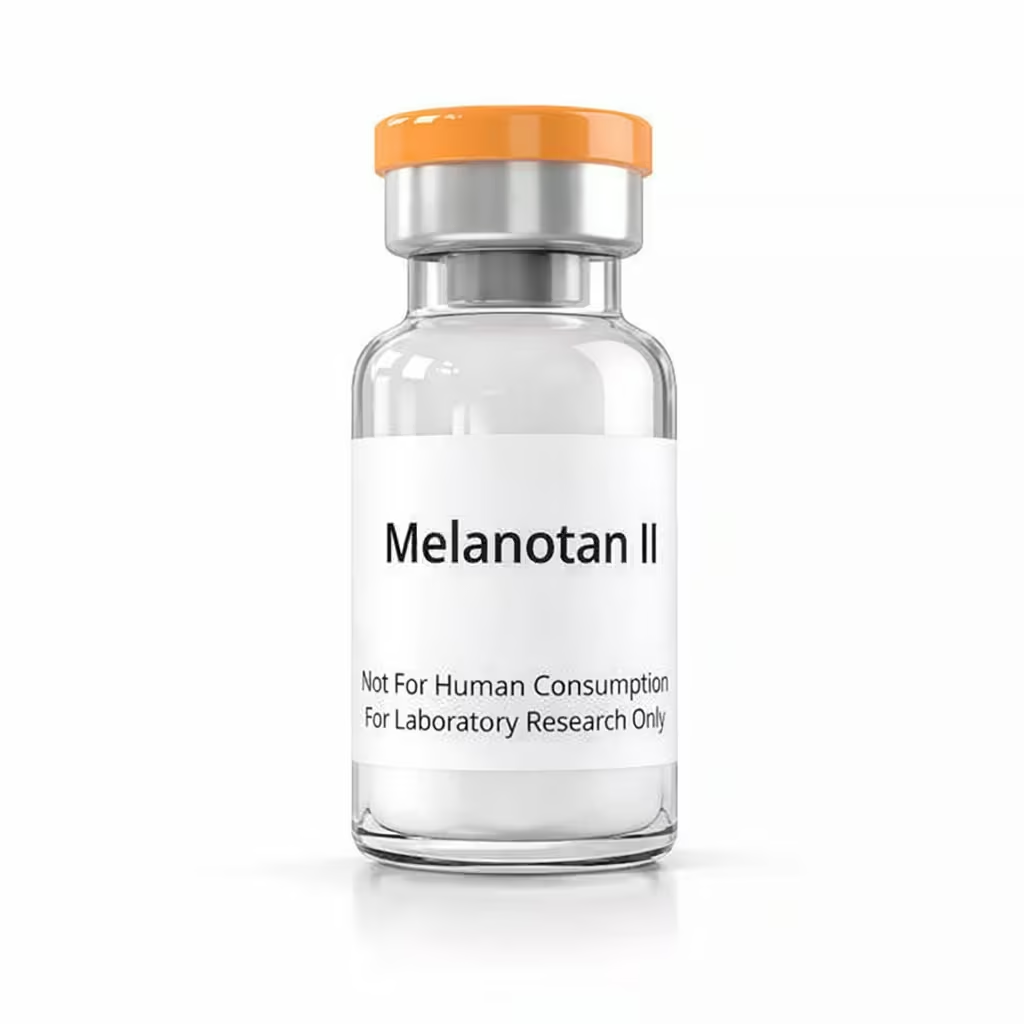
Cyclic Alpha-MSH Analog | Per Vial
From $35.00 / vial
4.7 / 5.0 - 419 reviews
Select Products
The melanocortin tanning peptide: stimulates eumelanin production in melanocytes to produce a natural-looking tan, while also enhancing libido and modulating appetite via central MC receptor pathways
Melanotan II is a synthetic cyclic analogue of alpha-melanocyte-stimulating hormone (alpha-MSH) that binds non-selectively to melanocortin receptors MC1R through MC5R. Its primary effects include stimulation of melanogenesis (eumelanin production) in skin melanocytes, providing photoprotective tanning with reduced UV exposure requirements; central CNS effects via MC3R and MC4R producing libido enhancement and appetite suppression; and spontaneous penile erection in male subjects in clinical trials. Melanotan II was developed at the University of Arizona in the 1980s as a potential sunless tanning agent and photoprotective compound.
Also see: Full Peptides Catalog | Official info: PubMed Melanotan Research
Melanotan II was developed at the University of Arizona in the early 1980s as part of a research program investigating photoprotection. The hypothesis was that a compound capable of stimulating eumelanin production - the dark, UV-protective form of skin pigment - could provide a cosmetic tan while simultaneously reducing the DNA damage caused by UV radiation. What researchers found was a compound with a broader pharmacological profile than anticipated: in addition to potent melanogenesis stimulation, MT-II acted on multiple melanocortin receptor subtypes in the brain, producing libido enhancement, appetite suppression, and spontaneous erections in male subjects.
PT-141 (Bremelanotide), the FDA-approved sexual health peptide, was derived directly from Melanotan II after researchers removed the tanning effect to create a CNS-focused compound. This lineage underscores MT-II's potency across the melanocortin receptor system.
| Peptide Name | Melanotan II (MT-II) |
| Sequence | Ac-Nle-cyclo[Asp-His-D-Phe-Arg-Trp-Lys]-NH2 |
| Molecular Weight | 1024.2 g/mol |
| Form | Lyophilized powder for reconstitution |
| Purity | > 99% (HPLC verified) |
| Storage | Refrigerate at 2-8C; protect from light |
| Price | From $35.00 per vial |
Initial melanocyte stimulation begins. Mild flushing, nausea, and facial redness are common at the start as the body adapts. Low dosing and gradual titration minimizes side effects during this phase.
Visible darkening of skin tone. Greater tanning response with UV exposure versus baseline. Libido enhancement and appetite changes typically become apparent during this phase.
Once desired color is achieved, maintenance dosing 1-2x per week sustains the tan. The tan persists several weeks after cessation, gradually fading as skin turns over naturally.
Melanotan II is administered via subcutaneous injection. It is rapidly absorbed and distributes to both peripheral melanocyte populations in the skin and to the central nervous system, where it crosses the blood-brain barrier and engages hypothalamic melanocortin receptors.
At MC1R on melanocytes (pigment-producing skin cells), MT-II stimulates the production of eumelanin - the dark, UV-protective form of melanin - via cAMP/PKA/CREB signaling and upregulation of tyrosinase, the rate-limiting enzyme in melanin synthesis. The result is enhanced pigmentation that darkens progressively with continued dosing and UV exposure.
Simultaneously, MT-II crosses the blood-brain barrier and binds to MC3R and MC4R in the hypothalamus and limbic system. MC4R activation initiates the same arousal-promoting dopaminergic pathways engaged by PT-141, producing libido enhancement and appetite suppression. The non-selective receptor binding profile of MT-II is what distinguishes it from the more targeted PT-141.
The eumelanin deposited in skin cells acts as a natural sunscreen - absorbing and scattering UV radiation before it reaches nuclear DNA. This photoprotective effect is the original rationale for MT-II's development and provides meaningful reduction in UV-induced DNA damage and sunburn risk during the tanning period.
Melanotan II is suited for adults seeking enhanced skin pigmentation as part of a wellness or cosmetic protocol, and for those seeking the additional libido-enhancing and appetite-modulating effects of broad melanocortin receptor activation. Its photoprotective properties make it of particular interest to fair-skinned individuals prone to UV damage.
Consult a licensed healthcare provider before beginning any peptide protocol. See Important Safety Information below.
Melanotan I (afamelanotide) is a selective MC1R agonist - it produces melanogenesis (tanning) with minimal CNS penetration and therefore minimal libido or appetite effects. Melanotan II is a non-selective agonist that binds MC1R through MC5R, producing both peripheral tanning and central CNS effects including libido enhancement, appetite suppression, and spontaneous erections. MT-I has been approved in Europe (Scenesse) for erythropoietic protoporphyria; MT-II remains a research compound.
MT-II stimulates eumelanin production in melanocytes regardless of UV exposure. However, some UV exposure (even indirect sun exposure) significantly amplifies and accelerates the tanning response. Most users combine MT-II with brief sun or tanning bed exposure during the loading phase to achieve results faster. The compound's photoprotective effect also means the skin tolerates this UV exposure better than it would without MT-II.
The tan from Melanotan II typically persists for several weeks to months after cessation, depending on natural skin turnover rate and sun exposure during the maintenance period. Most users maintain color for 4-8 weeks after their last dose. The tan fades gradually and naturally as pigmented skin cells complete their normal lifecycle, rather than peeling or fading unevenly like a topical product.
The most common side effects are nausea (particularly during the loading phase), flushing, facial redness, fatigue, and spontaneous erections in men. Nausea is dose-dependent and typically resolves within 1-2 hours of administration; taking MT-II before sleep minimizes this effect for most users. Gradual dose titration starting at the lowest effective dose significantly reduces side effect severity. Darkening of existing moles and freckles is also commonly reported and should be monitored by a dermatologist.
Important Safety Information